Sun Damaged Car Carpet Replacement: A Queensland Guide
Sun Damaged Car Carpet Replacement: A Queensland Guide
What if replacing faded carpet doesn’t solve the problem? In Queensland, sun damaged car carpet replacement can refresh a tired interior, but it won’t prevent further sun exposure. First, check whether you’re seeing surface fading or carpet that’s worn, brittle or damaged.
A colour change may be cosmetic, but it can also be a sign to inspect the fibres and fit more closely. The right next step depends on the carpet’s condition, the extent of the damage and how much sunlight reaches the cabin. Cleaning or added protection may be enough for some carpets; others may need replacing.
This guide explains what to look for and how to choose between cleaning, protection and replacement. You’ll also learn what to check when matching a vehicle-specific moulded carpet kit to your make and model. Tru-Fit Carpets by Vision Auto supplies flooring products across Australia, including vehicle-specific moulded carpet kits. Installation isn’t included, so plan that separately and consider ways to reduce ongoing sun exposure.
Key Takeaways
- Look beyond colour changes. Check the carpet fibres and fit to distinguish fading from more substantial deterioration.
- Consider how sunlight, heat, parking conditions and vehicle glazing affect exposure inside the cabin.
- Use the carpet’s condition to decide whether cleaning, protection or replacement is the most suitable next step.
- Inspect the carpet consistently and use shade or covered parking where practical to help limit further exposure.
- For sun damaged car carpet replacement, confirm that the moulded kit matches your vehicle and plan installation separately.
Table of Contents
- Sun Damaged Car Carpet in Queensland: What to Look For
- How Sunlight and Heat Affect Car Carpet in Queensland
- Repair, Protect or Replace Sun Damaged Car Carpet?
- How to Assess and Protect Car Carpet in Queensland
- Choosing a Replacement for Sun Damaged Car Carpet
Sun Damaged Car Carpet in Queensland: What to Look For
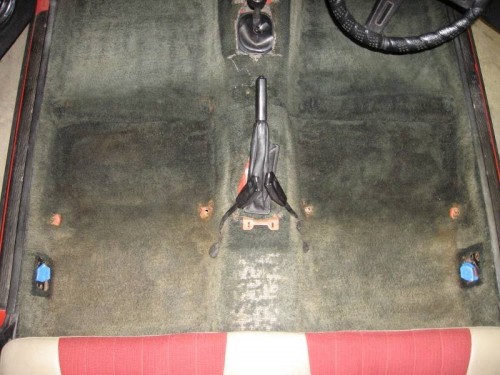
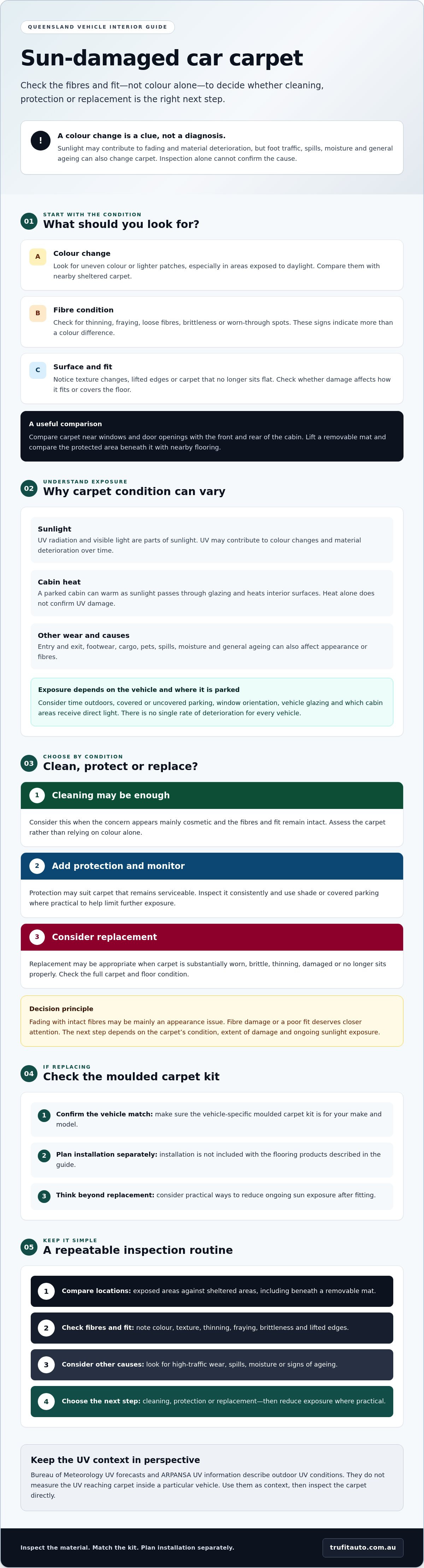
Look for uneven colour, faded patches and changes in texture, especially in carpet exposed to daylight. Then check whether the fibres are intact. A lighter-looking area may be cosmetic, while thinning, fraying, brittleness or a worn-through patch can affect the carpet’s condition and usability.
Sun-damaged car carpet is carpet showing colour or material changes after exposure to sunlight. These signs warrant a closer inspection, but they don’t prove UV exposure is the only cause. Foot traffic, spills, moisture and general ageing can also change carpet appearance and condition. Visible fading may be linked to photodegradation, a process in which light contributes to material breakdown, but inspection alone can’t confirm the cause.
How to spot fading, brittleness and surface wear
Compare exposed and sheltered areas. Check near windows and door openings, then compare the front and rear of the cabin. Lift a removable mat to inspect the carpet beneath it and compare that protected section with nearby flooring that receives more daylight.
- Colour change: Look for patches that appear lighter or less even than the surrounding carpet.
- Fibre condition: Check for fraying, thinning, loose fibres or areas that feel unusually brittle.
- Surface and fit: Note texture changes, worn-through spots, lifted edges or carpet that no longer sits flat.
Fading with intact fibres may be mainly an appearance issue. Thinning, brittleness or damage around an edge deserves closer attention, particularly if it affects how the carpet sits or covers the floor. These observations can help you decide whether sun damaged car carpet replacement is appropriate, but they don’t replace an assessment of the full carpet and the floor beneath it.
Why Queensland exposure deserves attention
Carpet exposure depends on where and how a vehicle is parked. A car regularly left outdoors or in an uncovered space may receive more direct sunlight than one kept under cover. Vehicle glazing, window orientation and which side faces the sun also affect where daylight reaches inside. Heat can build up in a parked vehicle, but exposure varies. There’s no single rate at which every interior will fade or deteriorate.
For current UV context, check the Bureau of Meteorology’s UV forecasts or ARPANSA’s UV information. These resources describe outdoor UV conditions, not the specific UV exposure or damage inside an individual vehicle. Use them as context, then inspect the carpet directly to judge its condition.
How Sunlight and Heat Affect Car Carpet in Queensland
Sunlight can affect a vehicle interior in more than one way. Ultraviolet (UV) radiation is an invisible part of sunlight; visible light is what you see entering through the windows. Heat is different: a parked cabin can warm as sunlight passes through the glazing and heats interior surfaces. These factors can occur together, but they aren’t interchangeable. Heat alone doesn’t confirm UV damage.
UV radiation, visible light and cabin heat
UV exposure may contribute to colour changes and material deterioration over time. The extent depends on the conditions, and visible fading by itself can’t establish exactly what caused it. ARPANSA explains the different types of UV radiation and their effects. Its general UV information can help put exposure in context, but it won’t measure the UV reaching carpet in a particular vehicle.
Vehicle glazing varies, so don’t assume every window filters sunlight in the same way. Exposure differs with parking location, time spent outdoors, window orientation, glazing and which parts of the cabin receive direct light. For example, a vehicle parked outside with one side facing the sun may expose different carpet areas than a vehicle kept under cover. The comparison depends on the vehicle and its parking conditions, not a fixed Queensland-wide rate of carpet deterioration.
Other causes that can resemble sun damage
Fading or worn fibres aren’t proof that sunlight is the sole cause. Consider how the carpet is used and whether the affected area matches its exposure. Repeated entry and exit can abrade carpet near the doors and driver’s footwell. Footwear, cargo and pets can also contribute to surface wear, while spills and moisture may leave marks or affect the material. General ageing can change its colour, feel or texture.
- Compare locations: Check whether the change is concentrated in sun-exposed areas or follows a high-traffic path.
- Inspect the fibres: Distinguish an even colour change from thinning, fraying or damage that affects the surface.
- Consider other causes: Note stains, dampness, repeated contact or signs of age before attributing the condition to UV.
A careful inspection helps separate appearance from material condition before deciding on sun damaged car carpet replacement. If replacement looks appropriate, review vehicle-specific moulded carpet flooring as one option, and confirm compatibility for your vehicle before choosing a kit.
Repair, Protect or Replace Sun Damaged Car Carpet?
The right option depends on what you find during inspection. Faded colour with intact, usable fibres is different from carpet that’s thinning, fraying or damaged. Cleaning may help with surface dirt, protective measures can limit some future exposure or wear, and replacement may suit carpet that’s extensively worn or an interior restoration. None is a guaranteed fix for every condition.
| Option | May suit | Limitations and when to inspect further |
|---|---|---|
| Cleaning | Surface dirt or removable marks on otherwise intact carpet. | Follow the cleaning product instructions and test as directed. Cleaning won’t restore worn fibres or reverse established fading. Investigate persistent marks or damage. |
| Protection | Carpet in usable condition where you want to reduce exposure or everyday wear. | Floor mats can cover high-traffic areas, while shade or covered parking may reduce direct sunlight. These steps don’t reverse existing deterioration or block all exposure. |
| Replacement | Extensive wear, persistent damage, or an interior restoration where existing carpet is no longer suitable. | Check the floor beneath the carpet and address moisture or other underlying issues before fitting new flooring. Installation must be arranged separately. |
When cleaning or protection may be enough
If the carpet looks faded but the fibres remain intact and the surface is usable, replacement may not be the first step. For dirt or marks, use a suitable cleaner according to its label. Don’t assume a cleaned patch will match the surrounding carpet, especially if the colour change is established rather than surface-level.
Use floor mats to cover areas exposed to repeated foot traffic, and choose shade or covered parking where practical. These measures can help limit further exposure or wear in relevant areas, but they won’t restore carpet that’s already brittle, thin or frayed.
When replacement deserves consideration
Consider sun damaged car carpet replacement if deterioration is widespread, damage persists, or new flooring is part of a broader interior restoration. Before fitting replacement carpet, check for moisture and inspect the floor beneath it. New carpet won’t address the cause of dampness or prevent future sunlight exposure on its own.
Tru-Fit Automotive Products supplies vehicle-specific moulded carpet flooring kits, but doesn’t provide installation services. Confirm the kit’s vehicle compatibility, then arrange fitting independently. A practical sequence is to assess the carpet, deal with underlying issues, choose suitable flooring and plan installation separately.
How to Assess and Protect Car Carpet in Queensland
A consistent inspection gives you useful details to check against a replacement kit’s vehicle application. Record your findings before deciding on sun damaged car carpet replacement, especially if the vehicle has been modified or restored.
A practical inspection before choosing replacement
- 1. Record the vehicle details. Note the make, model, year and body style. Similar vehicles can have different floor layouts, so these details matter when checking carpet compatibility.
- 2. Map exposure and compare condition. Photograph affected areas near windows, doors and footwells. Compare them with less-exposed sections and record visible differences.
- 3. Check carpet fitment. Look for lifted edges, bunching or gaps. Ensure existing mats sit flat and don’t shift into the driver’s footwell or interfere with the pedals.
- 4. Look for underlying issues. Check for dampness, unusual odours or visible floor damage. These may need attention separately before new flooring is fitted.
Keep the photos with your vehicle details. Use them when checking a moulded replacement’s application, and confirm compatibility rather than relying on a broad model description.
Simple ways to reduce further exposure
Where practical, park in a garage, carport or shaded location. This can reduce direct sunlight on the cabin, but it can’t guarantee complete UV protection. For current outdoor UV context, consult ARPANSA or Bureau of Meteorology guidance rather than relying on assumptions about the season.
If you use an interior cover or window treatment, check that it’s suitable for your vehicle and won’t obstruct your view, interfere with vehicle equipment or create a fitment hazard. Follow the product instructions and check applicable local requirements. Choose mats that fit securely, and check beneath them for trapped moisture.
Before using a cleaning product, confirm it’s intended for your carpet material and vehicle interior. Follow the label and test as directed.
To check flooring options, explore moulded carpet flooring from Tru-Fit Automotive Products. Confirm the vehicle application before selecting a kit. Installation is arranged separately.
Choosing a Replacement for Sun Damaged Car Carpet
Once you’ve decided the existing carpet needs replacing, match the replacement to your vehicle. A moulded carpet kit is shaped for a vehicle application, so the right fit depends on more than the badge on the bonnet. Check the supplier’s application details before ordering, especially if the vehicle has been modified or restored.
Check fitment before ordering a moulded carpet kit
Compare the listed application with your vehicle’s make, model, year and body style. Don’t assume a kit for one model year fits every trim, variant or restoration configuration. Differences in the floor layout or vehicle specification may affect compatibility.
If any detail is uncertain, check with the supplier before placing an order. Have your vehicle information and relevant fitment details ready. This can help clarify whether the listed application matches your vehicle, rather than relying on visual similarity or a broad model description.
What to arrange after selecting replacement flooring
Carpet and vinyl are separate flooring categories, not a simple better-or-worse choice. Consider the type of flooring you want and your vehicle’s requirements, then confirm the available application and product guidance. Tru-Fit Automotive Products supplies vehicle-specific moulded carpet and vinyl flooring kits, but does not provide installation services.
Arrange installation separately with a suitable installer. Before fitting, ask them to inspect the floor and check for dampness, damage or other underlying issues that need attention. Replacing carpet won’t resolve a problem beneath it, and unresolved moisture may affect the new flooring.
- Keep the vehicle details and confirmed application with your order records.
- Follow the supplied product guidance for handling and fitment.
- Ask the installer to raise any fitment questions or floor issues before work proceeds.
Good fitment starts with accurate vehicle details and clear application information. Keep the replacement decision separate from the cause of the original deterioration: new flooring refreshes the cabin, while parking and other protective measures remain part of ongoing care.
For sun damaged car carpet replacement, check Tru-Fit’s available flooring options and confirm the vehicle application before ordering. Explore Tru-Fit flooring options.
Choose the Right Carpet and Plan Your Next Step
Before deciding on sun damaged car carpet replacement, judge the carpet by both appearance and condition. Fading alone doesn’t tell the whole story, so check for worn fibres, damage and possible issues beneath the flooring. If replacement is the right option, confirm the kit’s vehicle application before ordering.
New carpet won’t prevent future sunlight exposure. Shade or covered parking, where practical, can be part of ongoing care. Plan installation separately too: Tru-Fit Automotive Products supplies vehicle-specific, pre-moulded carpet flooring kits, but doesn’t install them. The Australian business ships products directly to customers across Australia.
Ready to check your options? Explore Tru-Fit moulded carpet flooring and confirm the available application for your vehicle before choosing a kit. Assess the carpet, check fitment and arrange installation separately.
Frequently Asked Questions
Can sunlight damage car carpet?
Yes, sunlight can contribute to fading and material deterioration over time. UV radiation and visible light are distinct parts of sunlight, while cabin heat is a separate effect that can build up in a parked vehicle. The amount reaching the carpet varies with glazing, parking conditions and which areas receive direct light. Wear, spills, moisture and age can also affect the carpet, so inspect it before attributing damage to sunlight alone.
How can I tell if my car carpet needs replacing?
Look beyond colour. Compare exposed carpet near windows and doors with sheltered areas, then check for thinning, fraying, brittle fibres, worn-through patches or edges that no longer sit flat. Fading with intact fibres may be mainly cosmetic; damage affecting the surface or fitment deserves closer attention. Check for dampness, odours or floor damage as well, since these may need attention separately before replacement.
Does window tint stop car carpet from fading?
Don’t assume window tint will prevent fading. The amount of UV and visible light filtered depends on the vehicle glazing and the particular film, so check the film’s specifications rather than relying on a general claim. Tint also won’t eliminate cabin heat or block every source of exposure. Before choosing or fitting a window treatment, check its suitability for your vehicle and applicable local requirements.
Can faded car carpet be restored instead of replaced?
Sometimes cleaning can improve the appearance of surface dirt or removable marks, but it won’t restore colour that has faded or fibres that have deteriorated. Follow the cleaner’s instructions and confirm it’s suitable for the carpet material. If the carpet is intact and only looks uneven, replacement may not be necessary. If it’s thinning, brittle or damaged, assess its condition and the floor beneath before deciding what to do.
Should I use floor mats over sun-damaged car carpet?
Floor mats can cover high-traffic areas and may help limit additional wear, but they won’t reverse fading or repair damaged carpet. Choose mats that fit securely and lie flat. Check them regularly to ensure they haven’t shifted, interfere with the pedals or trapped moisture underneath. If the carpet is damp or the damage affects fitment, investigate the cause rather than covering it up.
How do I find replacement carpet that fits my car?
Match the supplier’s application details against your vehicle’s make, model, year and body style. Don’t assume a kit fits every trim, variant or restoration configuration. Tru-Fit Automotive Products supplies vehicle-specific, pre-moulded carpet flooring kits, but does not provide installation services. Confirm the exact application with the supplier if any details are uncertain, and arrange fitting separately.
How can Queensland drivers reduce sun exposure inside a parked car?
Where practical, park in a garage, carport or shaded location to reduce direct sunlight on the cabin. This can help limit exposure but won’t guarantee complete UV protection. A suitable interior cover may also help; check that it fits safely and doesn’t trap moisture. For current outdoor UV context, consult ARPANSA or Bureau of Meteorology guidance rather than relying on broad assumptions about the season.